
If you've ever stood inside a pole barn during a storm, you've heard rain on steel. The sound can be sharp and echo through the building, which is why many homeowners pause before putting steel roofing on their house. The question is fair:
Are metal roofs loud?
Are metal roofs noisy when it rains?
The answer depends less on the steel itself and more on how the roof is built underneath it.
Are Metal Roofs Loud When It Rains? What Homeowners Should Know
Why Post-Frame Buildings Sound Louder in the Rain
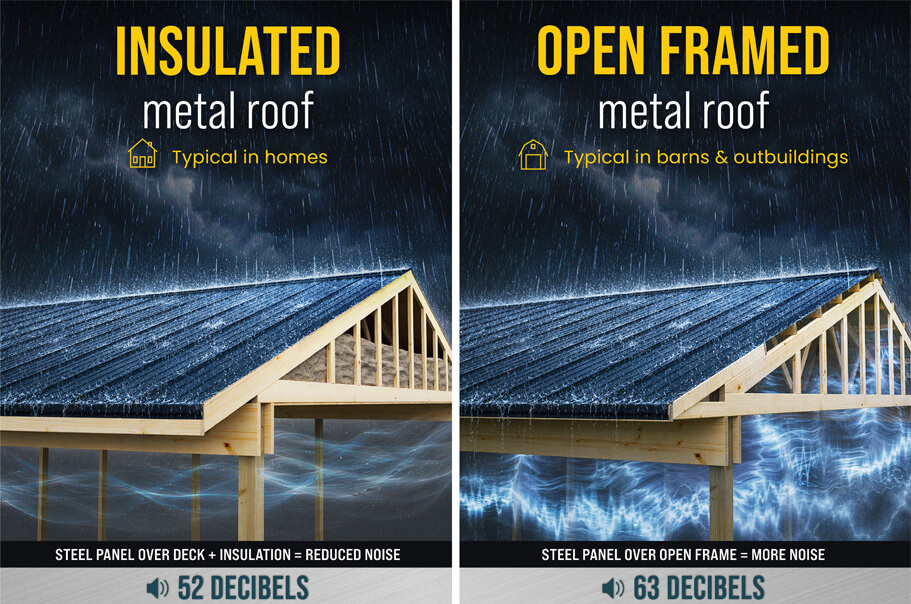
In agricultural and post-frame buildings, steel panels are commonly installed over open purlins with air space below. That open cavity allows the panel to vibrate more freely when rain hits it, and vibration produces sound. Those buildings are engineered for strength, storage, and equipment protection — not for interior quiet.
Hearing rainfall in that setting is completely normal. The structure is doing exactly what it was designed to do.
Because many people have experienced rain inside a barn or machine shed, that memory often shapes their expectations of steel roofing on a home. But residential construction is built differently.
How Residential Steel Roofing Is Installed
On a home, steel roofing panels are installed over solid plywood or OSB roof decking, along with underlayment, attic insulation, and a finished ceiling below. In many re-roof applications, steel is even installed directly over existing asphalt shingles, adding another layer of material between the steel panel and the living space.
That solid backing changes how the roof performs acoustically. Instead of open air beneath the panel, the structure absorbs and disperses vibration. The steel does not have the same freedom to flex, and that significantly reduces sound transmission into the home.
The panel itself hasn't changed. The assembly beneath it has.
What the Numbers Show: 52 dBA vs. 46 dBA
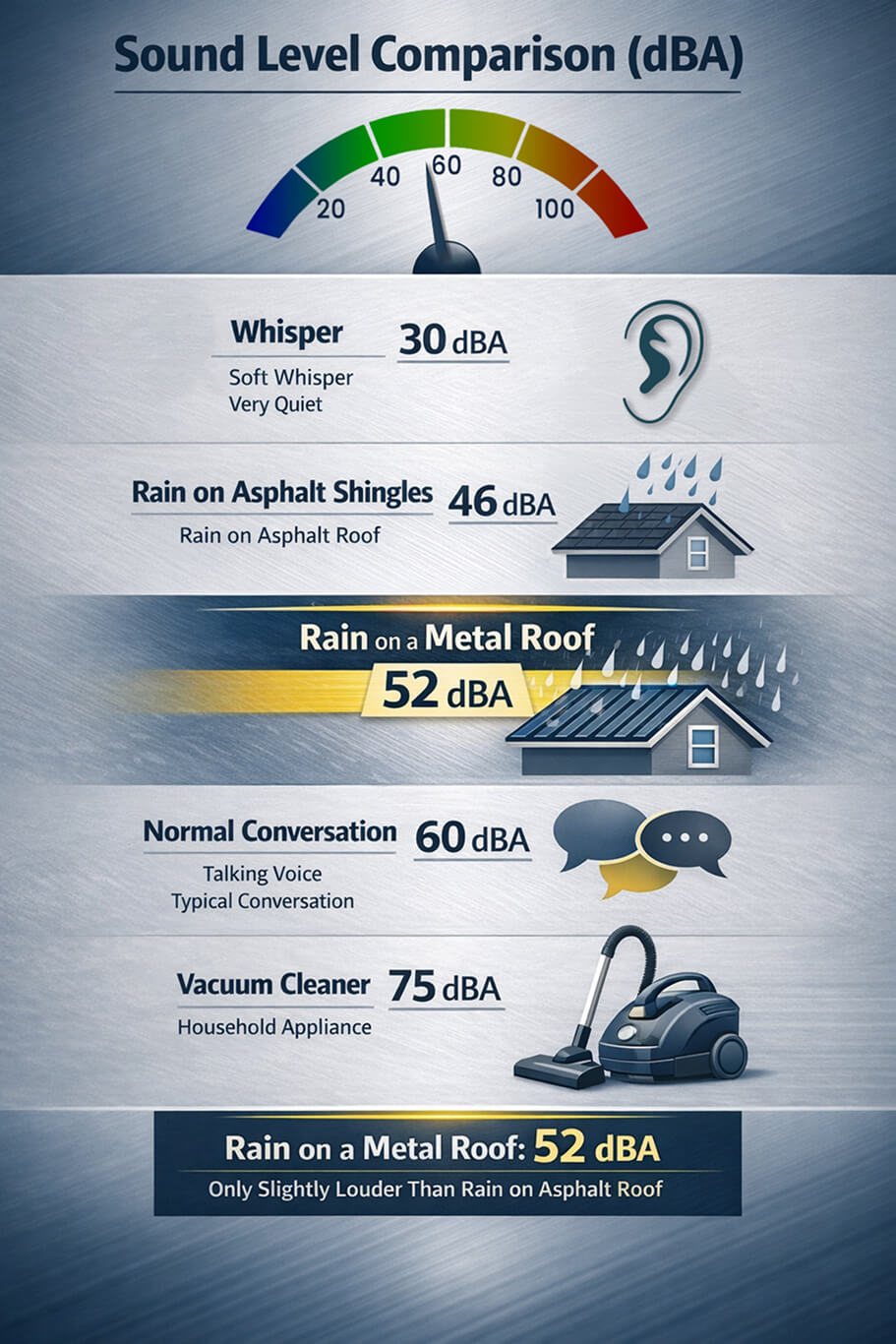
Measured comparisons show that rainfall on asphalt shingles averages around 46 dBA, while rainfall on a residential metal roof averages approximately 52 dBA. That difference of about 6 decibels is smaller than many assume.
For perspective, a whisper measures around 30 dBA, normal conversation typically sits near 60 dBA, and a vacuum cleaner ranges between 70 and 75 dBA. At 52 dBA, rainfall on a properly installed metal roof remains below everyday speaking levels and well below common household appliances.
Most people do not clearly distinguish changes in sound unless they approach an 8 to 10 dBA difference. In practical terms, that means a residential steel roof installed over solid decking or existing shingles is not dramatically louder than asphalt roofing
Why Experience in a Shed Doesn't Translate to a House
When someone recalls loud rain on a tin roof, it usually comes from a building with open framing, no decking, no insulation, and no finished ceiling. That configuration allows vibration and echo.
A home roof system is layered and enclosed. Decking, underlayment, insulation, and ceiling materials all contribute to reducing sound transmission. The experience inside a residence is fundamentally different from what you hear inside a post-frame outbuilding.
Different structures serve different purposes. A machine shed prioritizes durability and span capability. A house prioritizes comfort along with structural performance.
What This Means for Homeowners Considering Steel
If you are installing steel roofing on your home — whether in new construction or as a re-roof over existing shingles — the full residential roof system manages rain noise effectively. Steel roofing is selected for its longevity, strength, and ability to stand up to Midwest weather. When installed over solid decking or shingles, as is standard in residential practice, it performs without excessive interior noise.
Homeowners exploring steel roofing options at Menards® will find panels such as Pro-Rib® designed specifically for installation over solid roof decks. These panels integrate into typical residential construction methods, making them a practical choice for contractors and experienced DIY homeowners.
A post-frame building may echo during a storm. A properly built home maintains the comfort you expect.
Frequently Asked Questions About Metal Roof Noise
Are metal roofs loud during heavy rain?
Heavy rain increases sound on all roofs. On a residential steel roof installed over solid decking or existing shingles with attic insulation, the interior sound during heavy rain generally remains within comfortable, typical ambient levels and is not dramatically louder than other roofing materials.
Are metal roofs noisy during storms?
Rain intensity — not the roofing material — is the primary driver of sound level during a storm. A modern residential steel roof system with proper layers typically measures around 52 dBA during moderate rain, which is below normal conversation levels and far below noise from appliances like vacuums or traffic.
Does installing steel over shingles reduce noise?
Yes. When steel roofing is installed over existing asphalt shingles, that layer acts as additional mass between the metal and interior spaces, helping further dampen vibration and reduce sound transmission compared to open or minimal underlayment systems.
Is the sound of rain on a metal roof disruptive?
In most residential settings with solid decking and attic insulation, the sound of rain on a metal roof blends into normal background noise rather than standing out as disruptive. Many homeowners describe the sound as rhythmic or steady rather than startling or intrusive.